
The Trusted Priest: Microdrama Morality Thriller Pushes Faith to Its Breaking Point
Updated: Dec 1, 2025
| The Priest | The Influencer | The Rain Run | Gallery | BTS |

A priest falls for a married OnlyFans woman and begins “cleansing” her affairs, believing he’s saving her soul, unaware he’s losing his own.
There are films that ask to be watched, and then there are films that ask to be confessed to. The Trusted Priest belongs firmly to the latter.
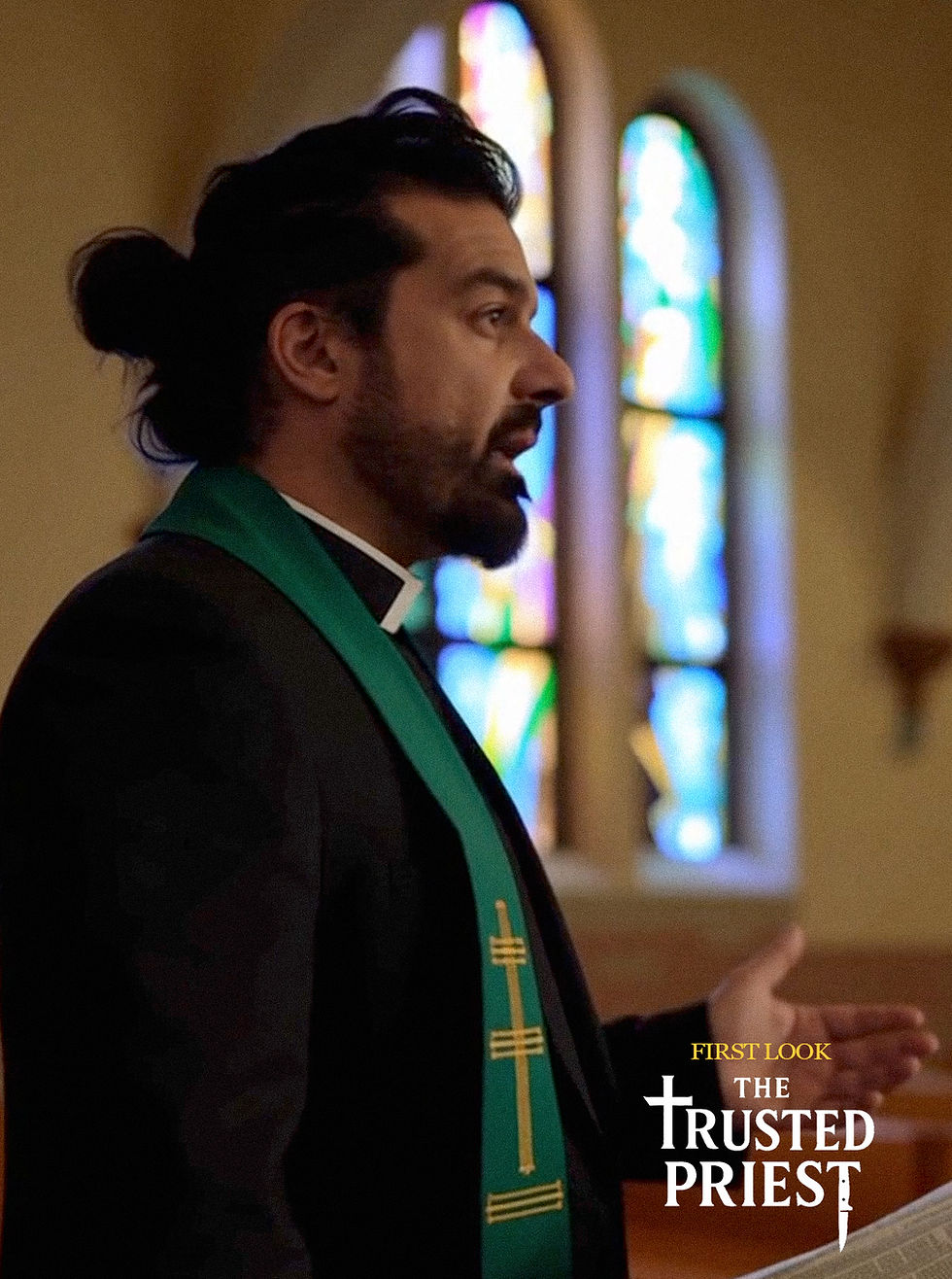
Shot with unsettling intimacy and drenched in rain-lit chiaroscuro, Stefan Pinto’s latest project merges faith, desire, and digital performance into a single, trembling narrative. The film is a microdrama and opens not with scripture, but with a smartphone. A woman: luminous; confessional; married, stares directly into her front-facing camera, filming a lipstick tutorial for her followers. Her mirror becomes her altar. Her audience, her congregation.
Across town, a priest scrolls.

Overview
At once neo-noir and A24-coded erotic thriller, The Trusted Priest dismantles the boundaries between morality and marketing, penitence and performance. It’s a story told in contradictions: sacred yet sensual, cinematic yet disturbingly believable.
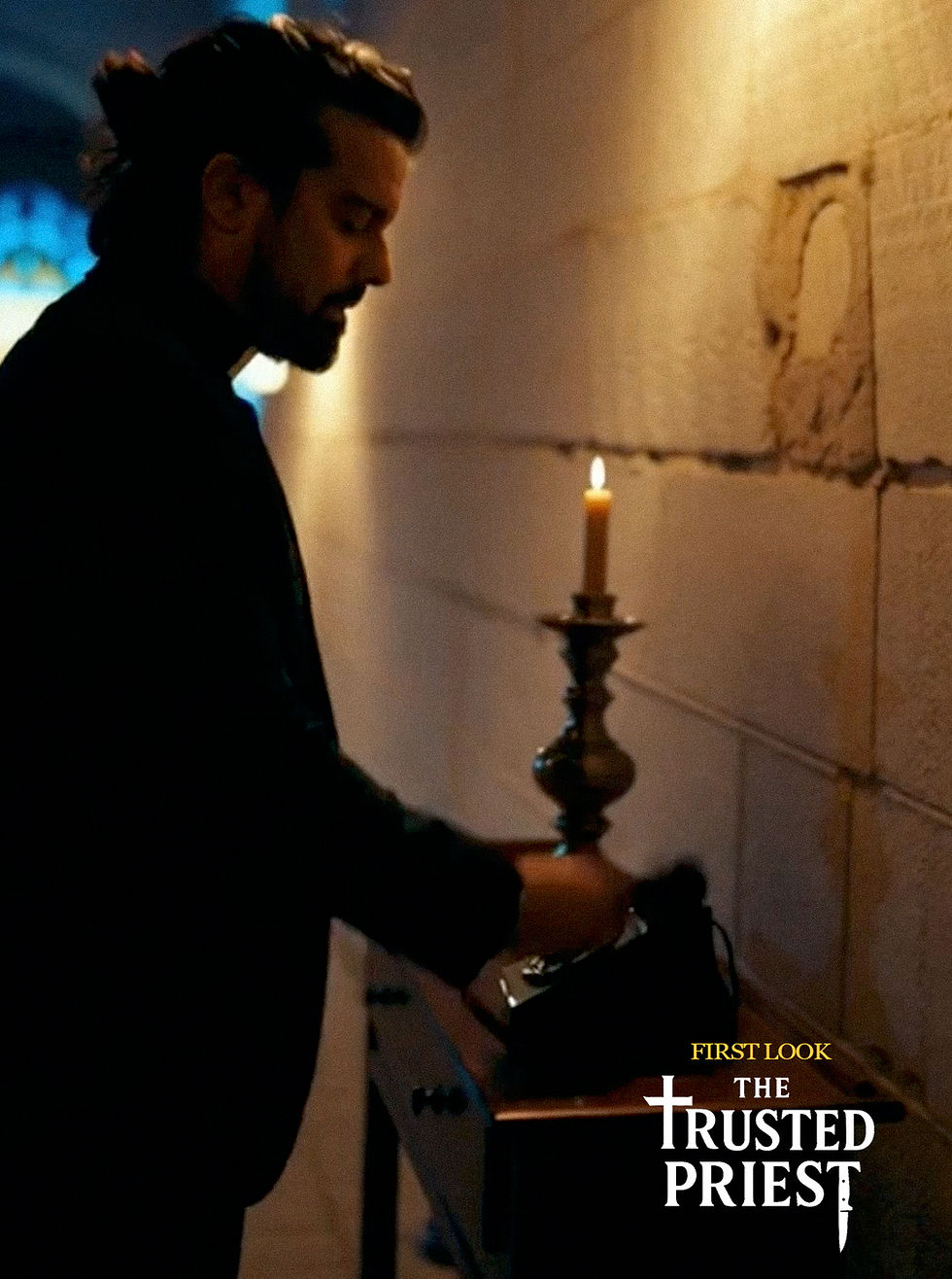
Set within the cavernous quiet of a provincial French church, the film explores what happens when faith is filtered through the algorithm. When even confession becomes content. The aesthetic palette alternates between candlelight and LED glow, crucifixes and camera phones. The result is visually hypnotic: Catholicism rendered as mood board, temptation edited to music, guilt given a glossy sheen.
Synopsis
A respected young priest (played by Stefan Pinto) becomes entangled with a woman from his parish: a married influencer whose curated perfection hides a life of chaotic liaisons. During her confessions, she weaves a tapestry of sin that entrances him. He listens, prays, forgives… and begins to imagine her salvation as his personal mission.

When her lovers begin to vanish, the priest is drawn into a spiral of guilt, faith, and delusion. He hears whispers on the phone: “It’s done.” He sees shadows he believes belong to someone else — but every trace leads back to himself.

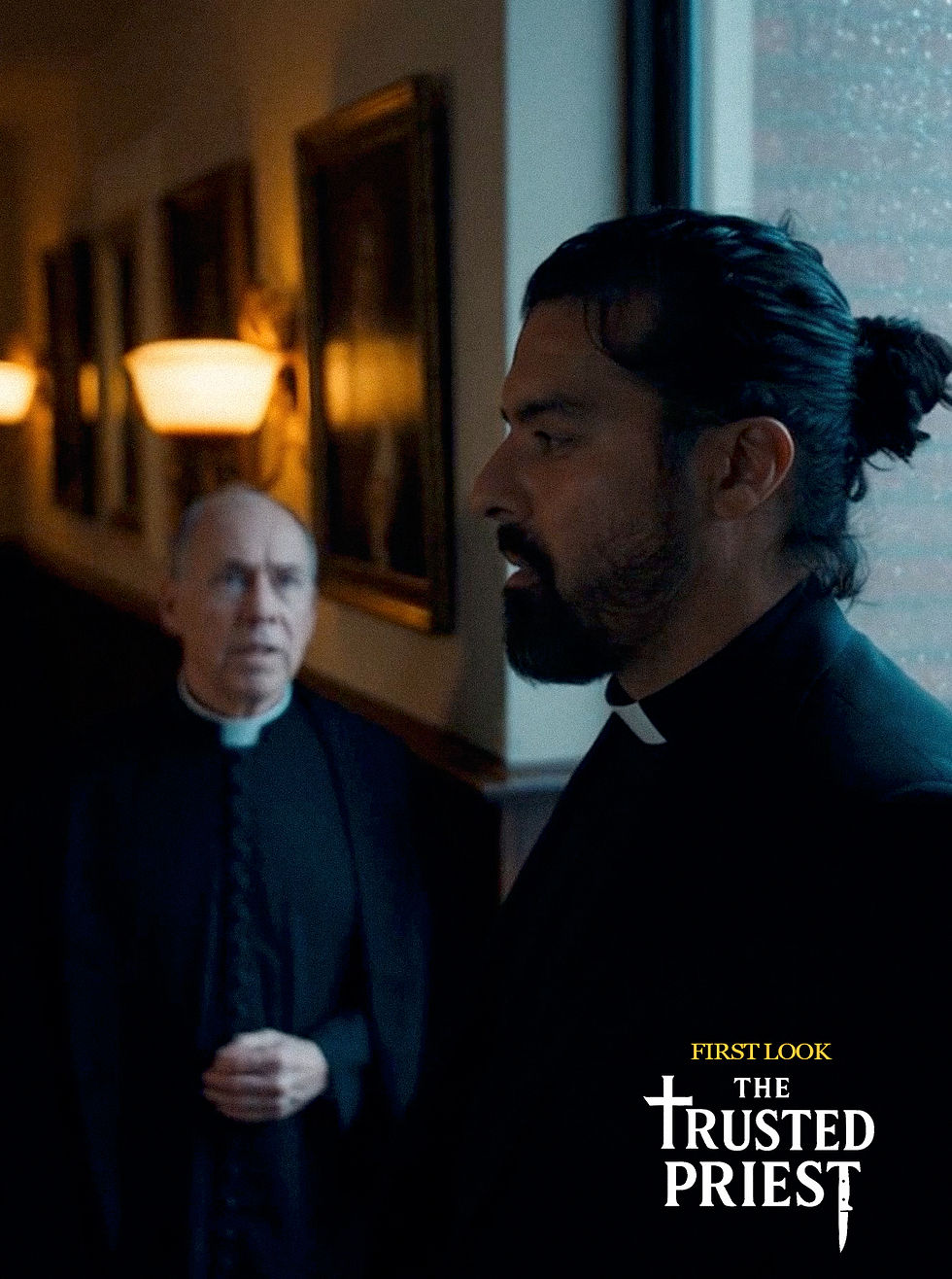
Convinced that another man is committing the crimes in her name, he seeks absolution from an older mentor priest, only to discover the voice of the killer is his own. In a rain-soaked finale, he collapses outside the church, cassock undone, screaming a single wordless No that echoes through the empty streets like a broken hymn.

Themes
The Trusted Priest interrogates the collapse of authenticity in a world where even virtue seeks virality. The influencer’s glossy self-branding mirrors the priest’s own moral branding; both are performers, each selling a version of salvation. Gen Z viewers have dubbed the aesthetic “holy thirst”: religious guilt recast as cinematic desire.

The film flirts with the question of dual lives, the digital and the divine, suggesting that absolution and attention may now be the same currency.
Production Notes
Created in Montpellier, France, the movie’s tone is inspired by The Blow-Up, First Reformed, and The Passion of Joan of Arc. Its rain scenes and confessional sequences were shot as if leaked phone footage, blending cinéma vérité with stylized eroticism. Stefan Pinto’s performance anchors the piece: muscular, tortured, paradoxically serene.

Behind the lens, the project extends Stefan Pinto’s growing canon of moral-aesthetic experiments: works that explore desire, guilt, and spectacle in the age of algorithmic storytelling.

Closing Reflection
Is The Trusted Priest a film about faith, or about the performance of it? About sin, or the aesthetics of sinning beautifully? Perhaps it’s both. Like its protagonist, the film never truly repents; it merely reflects, and in that reflection, we see ourselves watching.
Reactions
Early reactions from test audiences have been visceral: “Super good! Very Suspenseful!” - Madsen Gallery (Silicone Valley, CA), a minimalist verdict that captures the film’s unnerving, slow-burn intensity. “Love this.” - Los Angeles Magazine

During a closed screening at the Musée Fabre in Montpellier, some Gen-Z attendees delivered their own unsparing verdicts: “It’s giving Fleabag meets Exorcism.” “He’s literally rizzing his way into hell.” “Priestcore cinema just dropped.” “The duality of thirst and theology is wild.”

About Stefan Pinto
Stefan Pinto is former male model turned photographer. Once a social media influencer, he has worked with brands including Estée Lauder Lab Series which led to The New York Times feature “Your Abdominals May Need a Touch-Up.” Stefan Pinto was featured in Playgirl Magazine as centerfold, and was the man in the infamous “I’d Rather Go Naked Than Get Fat” yogurt ad. He has appeared on USA Network’s Burn Notice.
